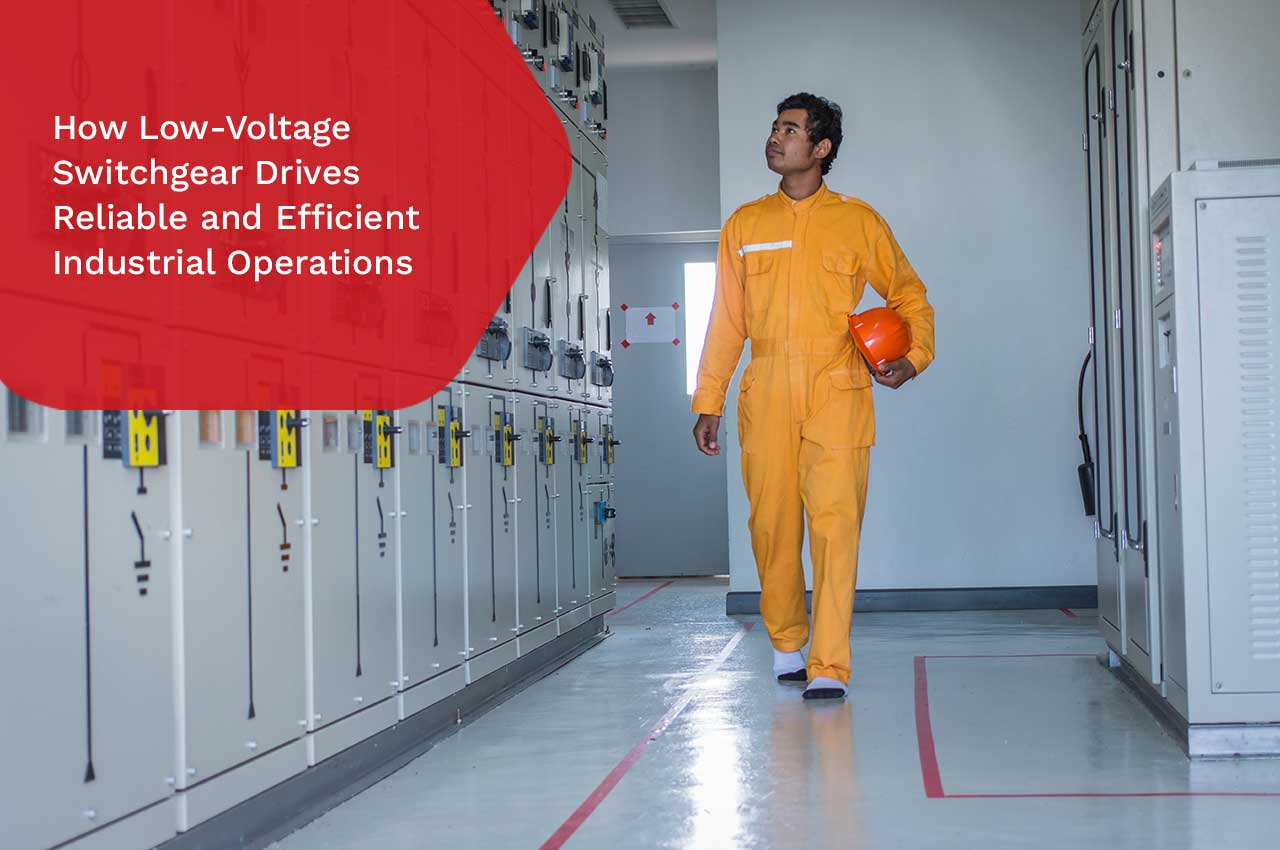
How Low-Voltage Switchgear Drives Reliable and Efficient Industrial Operations
All industrial operations require a steady and continuous supply of power in order to function properly and maintain productivity. Residential, commercial or industrial projects all require some level of electrical power in order to keep their machines operating efficiently. Even the smallest interruption to the electrical supply could result in costly production delays, damage to machinery and lost revenues.
Electrical infrastructure is crucial to success in all industries when it comes to providing a reliable electrical supply, which will benefit users. Additionally, each electrical supply system’s success depends on an adequate amount of low-voltage switchgear. The performance of switchgear directly correlates to how well the electrical supply system will be able to control and manage electrical distribution. Without switchgear functioning properly, power distribution systems will become susceptible to faults, inefficient operation, and increased hazards/risks.
How Low-Voltage Switchgear Improves Reliability in Industrial Operations
In industrial environments, reliability is a critical factor for all operations. Low-voltage switchgear helps enhance system reliability by providing multiple layers of protection and control that can be used to safely operate your business.
Stable power distribution is one of the main functions of low-voltage switchgear. It allows for electricity to be evenly distributed to all machines and systems throughout the facility. By ensuring equal electrical distribution among the components of your operation, it reduces overloading and minimises stress on electrical equipment. This allows for stable, consistent operation of your equipment.
Another major advantage of using low-voltage switchgear is that it can detect faults on the electrical system immediately. In this way, it will isolate the faulty section of the electrical system before it reaches other parts of the system. This enables limiting potential damage to any of your electrical system components and decreasing your overall downtime.
Reliability is an essential part of safety. Without electrical system reliability, serious risks arise for personnel and equipment due to electrical failure. It contains multiple electrical protection devices, such as circuit breakers and protective relays, which help to reduce the risk of major electrical failures, including fires, arc flash accidents and electrical shock.
Reliability has also been enhanced through modern low-voltage switchgear by enabling predictive maintenance. By utilising smart sensors and monitoring devices, maintenance teams can track parameters such as current, voltage and temperature. These insights enable them to take preventive measures prior to the occurrence of an electrical failure.
How Low-Voltage Switchgear Increases Energy Efficiency in Industrial Operations
Modern businesses have placed emphasis on being as energy-efficient as possible. By minimising wasted energy, they are also able to reduce operational costs and help fulfill their sustainability objectives. Low-voltage switchgear is an essential part of achieving energy efficiency.
- Optimised Energy Distribution
It provides control over the distribution of electrical power throughout an industrial facility. It directs the flow of electricity to where it is needed most and prevents unnecessary energy from being distributed. This optimised distribution will help to reduce the amount of energy wasted.
- Smart Monitoring and Control
Smart technology is commonly incorporated into current low-voltage switchgear. Sensors and digital interfaces are used to monitor energy consumption on a minute-by-minute basis, allowing for the identification of overall patterns of energy usage. Additionally, many smart switchgear solutions provide the ability to redistribute electrical loads from non-operating equipment to other components, thus conserving energy.
- Reduced Electrical Losses
Modern switchgear designs are purposely built to have a minimum amount of electrical resistance and energy loss while providing maximum current efficiency. The reduction of electrical resistance results in less energy being dissipated as heat, resulting in enhanced energy efficiency throughout the electrical distribution system./li>
- Prolonged Equipment Life
By having an efficient system of distributing power and protecting those systems, industrial machines operate less, thus extending the operational life of the machine. This reduces the number of repairs needed. Longer operational machine life results in energy savings. Manufacturing new parts or machines uses more energy than operating the existing equipment.
Final Thoughts
For the smooth running of today’s factories, having a dependable and effective supply of electricity is critical. Stable electrical distribution increases reliability. It also improves the speed of detecting faults with increased safety and predictive maintenance.
In addition to increasing the reliability of electrical systems, Low-Voltage Switchgear improves the efficiency of energy usage by helping to balance the flow of electricity to produce energy efficiently. It also improves the quality of electricity produced by cleaning voltage spikes and surges and reduces the amount of energy wasted.
Companies that use modern Low-Voltage Switchgear can expect reduced downtime and provide an environmentally sustainable way for their business to operate into the future.
FAQs
Q. Why is low-voltage switchgear important in industrial operations?
A. It ensures reliable power distribution, protects equipment from faults, improves safety, and minimises downtime in industrial environments.
Q. Can low-voltage switchgear reduce industrial downtime?
A. Yes. It isolates faults locally and supports predictive maintenance, allowing operations to continue while minimising unexpected shutdowns.
Q. How does low-voltage switchgear improve system reliability?
A. It detects faults quickly, isolates affected circuits, and maintains stable power flow, preventing widespread outages and equipment damage.
Q. What industries commonly use low-voltage switchgear?
A. It is widely used in manufacturing, processing plants, data centers, infrastructure projects, and large commercial facilities.
Q. How does low-voltage switchgear enhance electrical safety?
A. It prevents overloads, short circuits, and arc faults by automatically disconnecting unsafe circuits, protecting personnel, equipment, and overall facility operations.
Q. What role does low-voltage switchgear play in power quality management?
A. It helps maintain voltage stability, correct power factor, and reduce harmonics, ensuring efficient equipment performance and minimised energy losses.


 Brands





 Applications


 Recent Posts