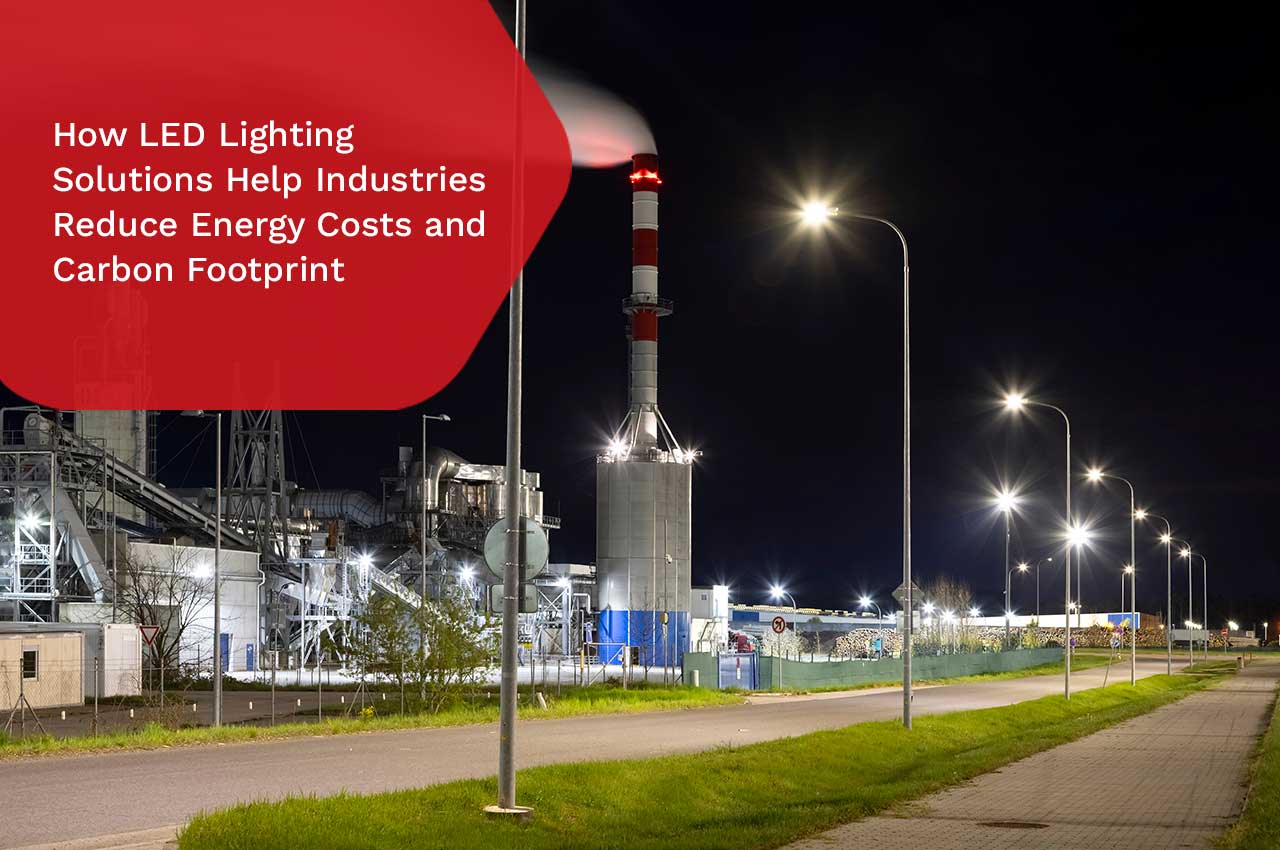
How LED Lighting Solutions Help Industries Reduce Energy Costs and Carbon Footprint
With rising competition in the global marketplace, companies want to save money on operating costs and achieve maximum environmental sustainability with minimum effort. An excellent way for companies to achieve both goals is by switching to LED lights.
The new generation of LED lighting solutions is exceptionally efficient for power consumption and significantly lowers carbon emissions compared to standard incandescent light bulbs. Therefore, all industrial buildings, like warehouses, manufacturing plants and retail stores, can benefit from it.
In this blog, let’s discuss how this modern lighting solution saves energy and minimises the carbon footprint for the industries and generates long-term savings by creating a sustainable growth opportunity.
The Industrial Challenge: High Energy Demands
Most industrial businesses run lighting systems for an extensive period. Traditional light sources like incandescent and fluorescent bulbs consume more electricity than their newer counterparts. This is because they convert the electrical energy into heat rather than light. The result is not only high electric utility bills but also higher energy costs due to increased cooling loads and maintenance expenses.
LED lighting solutions represent an efficient, long-lasting and environmentally friendly alternative to traditional light sources.
This lighting is transforming the way light is used across all areas of business. It also supports industrial sustainability while improving the efficiency of industrial operations.
How Do LED Lightings Help Industries Reduce Energy Costs?
The lowest operating expenses associated with LED lights are the primary reason for the change towards using LED lighting systems over traditional lighting systems.
1. Superior Energy Efficiency
The technology behind this is an entirely different way of creating light. The lighting solution uses semiconductor technology. The technology is able to create light using up to 80% less electricity when compared to incandescent or traditional fluorescent lamps.
LED lighting solutions, therefore, use less electrical power to produce the same amount of light as traditional lighting systems.
With such high efficiency, industries can significantly cut their electricity consumption.
2. Reduced Thermal Energy Outputs
Traditional lighting produces a very large amount of thermal energy as waste. This releases excess heat, forcing HVAC and air-conditioning systems to consume more energy to maintain the temperature.
3. Longer Lifetimes Lead to Lower Maintenance Costs
Typically, LED lamps last between 25,000 and 50,000 hours. This lifespan far exceeds that of both incandescent and fluorescent bulbs. Therefore, long-lasting LED lamps reduce replacement frequency and downtime.
4. Enhanced Lighting and Productivity
The advancement of lighting provides better quality light with high colour rendering and targeted illumination. As a result, it enhances safety and productivity in the workplaces. Having better-quality light reduces errors in work, increases employee satisfaction, and allows for a safer workplace setting, leading to increased operational performance.
5. Advanced Lighting Controls
The majority of LED systems are now equipped with advanced lighting control devices, such as sensors, automatic timers and automated controls that turn off or dim lights in unoccupied areas.
This functionality not only decreases energy consumption but also provides an opportunity for real-time energy management of lighting usage at the facility level.
How does LED lighting contribute to lowering an industry’s carbon footprint?
The importance of minimising energy usage is increasing rapidly; however, reducing the negative impact of industrial lighting on the environment will continue to be an important consideration for companies and governments as they pursue net zero emissions targets.
- Less Energy Consumption Means Lower Emissions
This helps companies lessen the carbon footprint through energy savings. Since less electricity is needed for LED systems to operate, the demand on power grids decreases. This reduction in energy demand directly translates into lower greenhouse gas emissions, such as CO₂.
Studies indicate that transitioning from incandescent lighting to LED lighting achieves a reduction of up to 80% in emissions generated from the use of electric lights.
- Fewer Bulbs & Less Waste
LED lights have a longer lifespan than most other forms of light, thus leading to fewer replacements; hence, there are fewer LED bulb disposals.
Consequently, LED lighting solutions have lower energy and environmental costs associated with manufacturing.
- No Hazardous Materials
Conventional fluorescent light tubes contain hazardous products, including mercury. While all of the materials in every LED light are free from heavy metals and do not require special disposal processes, eliminating any potential methods of contaminating the environment.
- Supports Corporate Sustainability Goals
Adopting LED solutions helps industries to maintain their sustainability goals. Reducing carbon footprint in the facilities bolsters corporate reputation, aligned with regulatory requirements.
Final words
To fully gain the benefits of the advanced lighting solutions, one needs to work with a trusted solution provider that understands the requirements of industries and offers tailored solutions.
LS Electricals, one of the reputed LED solutions providers, supplies high-quality LED lighting and expert guidance for energy optimisation. Whether you need LED fixtures or high-bay industrial lights, LS Electricals can support you for smarter and greener lighting systems.
FAQS
Q. Why is LED lighting better for industrial use?
A. LED lighting is energy-efficient and long-lasting. It reduces operational and maintenance costs.
Q: How does LED lighting help reduce energy bills?
A. LED lights consume significantly less electricity while delivering the same or better illumination.
Q: Does LED lighting help lower carbon emissions?
A. Yes, reduced energy consumption from LED lighting directly lowers an industry’s carbon footprint.
Q: Is upgrading to LED lighting a cost-effective investment?
A. Yes, the long lifespan and energy savings make LED lighting a highly cost-effective solution over time.


 Brands





 Applications


 Recent Posts