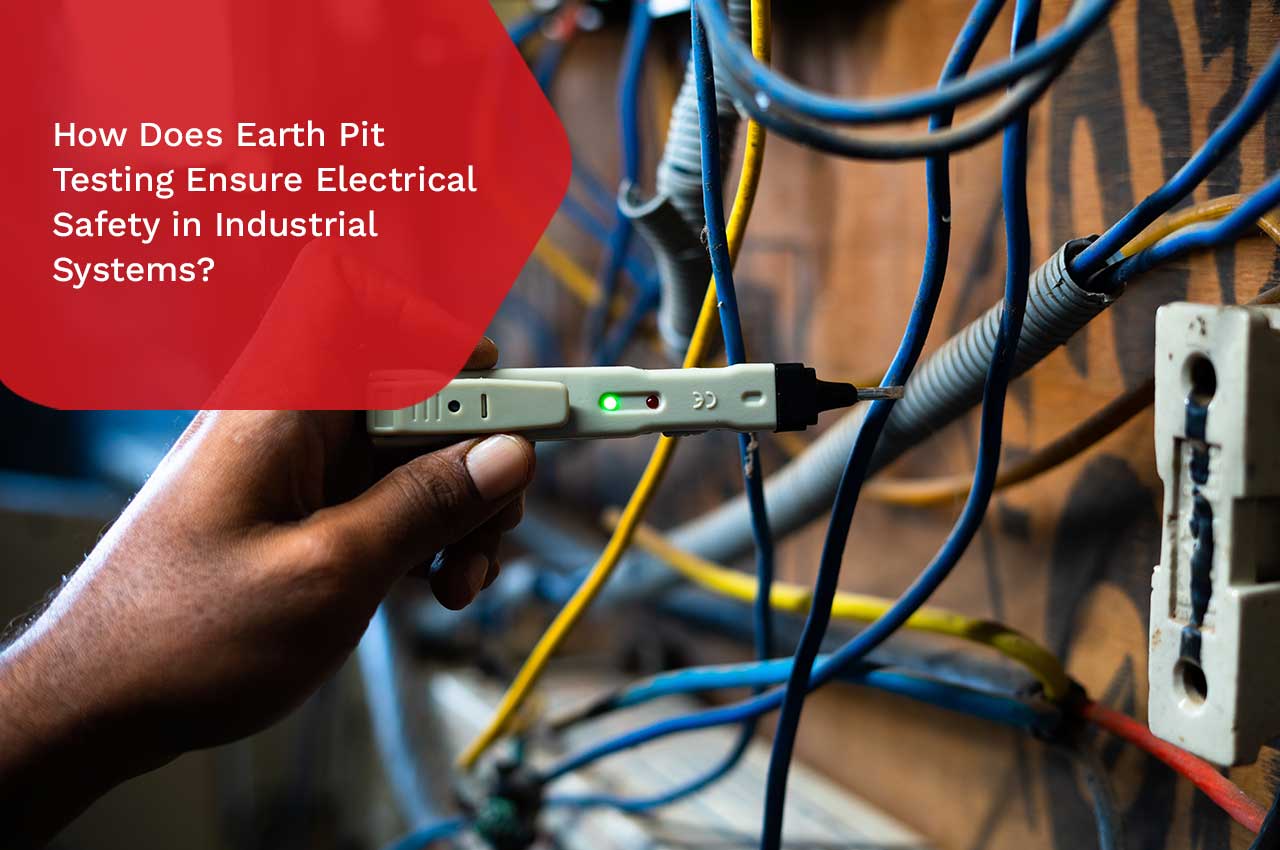
How Does Earth Pit Testing Ensure Electrical Safety in Industrial Systems?
Ensuring electrical safety in all kinds of workplaces is not negotiable; therefore, one of the best practices available to protect people, their property and their production processes is an earth pit test.
LS Electricals provides professional earth pit testing services, ensuring industrial facilities maintain proper grounding and electrical safety. This article will discuss all aspects of the Earth Resistance testing performance, including the advantages of earth resistance testing, which helps to prevent individuals from receiving an electrical shock, as well as the benefits of performing the test on industrial equipment.
What is Earth Pit Testing?
Earth pit testing is a way to find out if you have installed an earth electrode properly. The earth electrode (metal conductor) is buried and provides a connection from electrical equipment or system to the Earth to divert any electrical faults away from the equipment and into the Earth’s ground.
1. Earth resistance testing can measure the resistance of the earth electrode to its surrounding soil.
2. If the resistance measured is low, it means that electrical surges and faults can safely be sent to the earth.
3. Earth pit testing will also help to identify several issues with grounding, such as soil resistivity, corrosion and other conductivity problems.
The testing services performed by LS Electricals will give accurate results, as well as allow for proper grounding.
Why Does It Matter to Industries?
Industrial sites like factories, power plants and data processing centres experience high levels of electrical load and frequent voltage spikes within their electrical systems. The lack of a correctly sized and tested earthing system increases the risk of serious problems due to electrical overloads and surges in these industries.
Professional testing agencies such as LS Electricals are able to provide an accurate assessment of an organisation’s earthing systems so that users can have confidence that their systems are safe for use.
Importance of Earth Pit Testing
Industrial electrical systems are large and complex. A failure in one component, such as inadequate grounding, can cascade into major safety risks. Earth resistance testing plays a crucial role in managing these risks effectively. One of the advantages of earth resistance testing is that it supports an organisation’s efforts to reduce and manage those risks.
The Core advantages of earth pit testing are that
1. Ensures Safety
- Identifying and Mitigating High-Resistance and Faulty Grounding Conditions.
- Reduces the Risk of Electric Shock to Workers and Operators.
- Ability to Prevent Arc Faults and Electrical Fires.
2. Protects your Equipment and Infrastructure
- Fault currents diverted into the earth prevent damage to sensitive electronics.
- Provides a longer life span of the system by avoiding electrical faults.
3. Regulatory Electrical Safety Standards
- Many electrical safety standards require periodic earth pit or earth ground testing.
- Compliance reduces legal liabilities and enhances workplace safety credibility.
4. Operational Reliability
- Regular testing ensures uninterrupted operations and minimises downtime.
- It’s a proactive maintenance activity, not just a reactive one.
LS Electricals can provide earth pit testing services that are regulatory and safe.
How Does Earth Pit Testing Prevent Electrical Shocks?
An electrical shock occurs when electricity travels through someone or something along an unexpected path. Proper grounding of an electrical system, as determined by earth resistance testing, provides a controlled, safe route back into the soil for fault currents, such as those produced by a short circuit or lightning strike.
1. Mechanics of Electrical Shock Prevention
Through the use of earth pit testing, ground systems are designed to provide a low-resistance path for fault current.
- Earth resistance testing ensures that the grounding system offers low resistance for fault currents.
- When a fault occurs (e.g., short circuit or lightning surge), electricity travels along this low-resistance path instead of through equipment or humans.
2. Protection Coordination
- Grounding systems provide paths to protective devices (circuit breakers and relays).
- Grounding systems provide paths to and through circuit breakers and protection devices as a means to create paths for grounding for the efficient and timely operation of circuit breaker equipment to trip.
3. Voltage Stabilisation
- Grounding provides stabilisation support for electrical system voltage levels.
- By diverting stray electrical energy into the ground, the system’s voltage levels remain predictable and safe.
4. Real-World Impact Of Faulty Grounding
An inadequate earthing system can contribute to:
- Static or unexpected voltage changes from electrical faults.
- Increased risk to workers performing maintenance or servicing on equipment.
- Failure or malfunction of sensitive electronic components resulting in lost production.
LS Electricals‘ regular Earth Resistance Testing service will eliminate these risks by ensuring that your earthing system is operating effectively over time and through any changes to your environment.
When Should Earth Pit Testing Be Conducted?
Earth resistance testing is an essential part of ensuring optimal safety and performance and should be performed at least on an ongoing basis.
Frequency of Earth Pit Testing:
- At the time of commissioning of any electrical equipment.
- After a major upgrade to the system or after a new electrical load has been added.
- During routine maintenance checks.
- When there have been environmental changes (e.g., changes to the moisture level in the soil).
Performing periodic testing will help sustain optimal performance and discover signs of degradation early on. LS Electricals offers Earth Pit Testing Service with custom-scheduled earth resistance testing for the industrial sector to ensure continued safe and dependable operation.
Final Words
In conclusion, best practices for obtaining accurate, long-term results of grounding on machines and systems are required in order to have reliable and sustainable ground performance. The Earth Pit Test provides an accurate evaluation of the effectiveness of the ground when using calibrated measuring devices, performing tests under consistent conditions, maintaining records of all test results and performing full inspections.
The disciplined use of the Earth Pit Test has provided advantages to users in terms of electrical safety, early detection of faults, protection of the equipment and compliance with standards. The implementation of the earth resistance test, therefore, enables industrial systems to perform at a more stable level with less risk of electrical problems and safety hazards.
FAQ
1: What is Earth Pit Testing?
Earth Pit Testing is the process of measuring the resistance of an earth electrode to ensure electrical faults are safely diverted into the ground.
2: Why is Earth Pit Testing important for industrial systems?
It helps prevent electrical shocks, equipment damage, and fire hazards by ensuring proper grounding in high-load industrial environments.
3: How does Earth Pit Testing prevent electrical shocks?
It provides a low-resistance path for fault currents so electricity flows safely into the earth instead of through people or equipment.
4: When should Earth Pit Testing be carried out?
It should be conducted during commissioning, after system upgrades, during routine maintenance, and when soil or environmental conditions change.


 Brands





 Applications


 Recent Posts